


Wimbledon Grass Court Strategy: A Player's Guide
If you’ve ever watched The Championships, Wimbledon and wondered why the tactics look so different from other Grand Slams, you’re not alone. Playing on the hallowed grass courts of the All England Club is a unique chess match, demanding a specific vocabulary of shots and strategies. This guide breaks down the key terms and concepts that define the art of winning on tennis's most famous lawn.
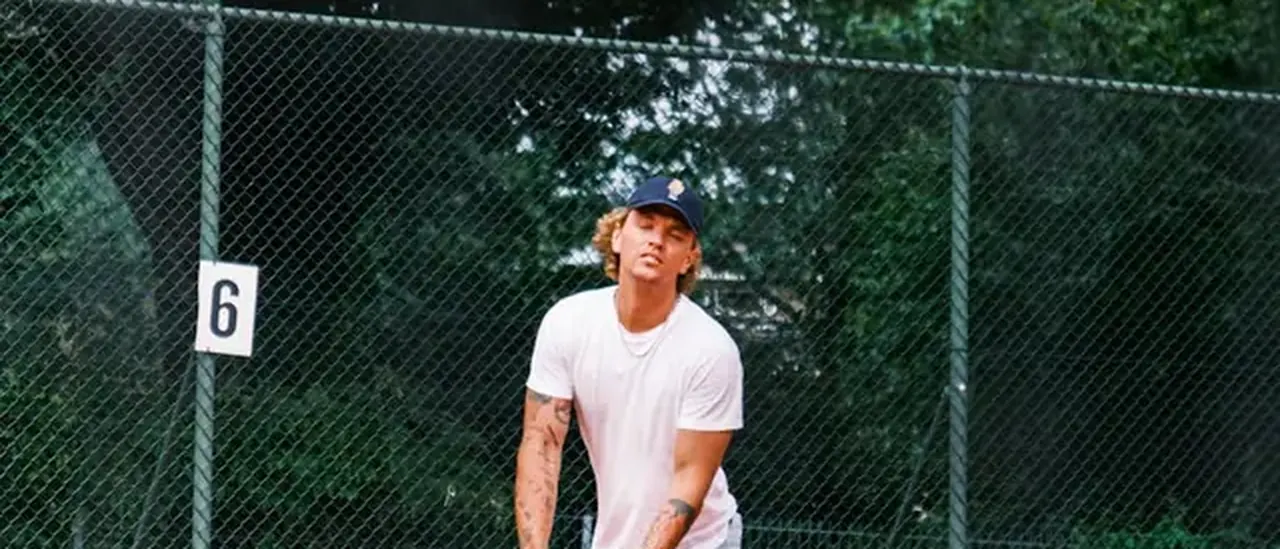
Serve and Volley
A classic, aggressive grass-court tactic. The player serves and immediately charges forward to the net, aiming to cut off the return with a volley before the opponent can react. Its effectiveness on grass comes from the low, fast bounce that keeps returns low, making passing shots harder for the receiver.Chip and Charge
A disruptive tactic used primarily on return. Instead of taking a full swing, the player blocks or "chips" the return back low over the net, often with backspin, and follows it in to the net. On grass, this takes time away from the server and can force a difficult half-volley or passing shot attempt.Slice Backhand
A backhand shot where the racket cuts underneath the ball, imparting backspin. On grass, the slice stays low and skids through the court, making it incredibly difficult for an opponent to attack. It’s a foundational shot for controlling rallies and setting up approaches to the net.Low Bounce
The defining characteristic of a grass surface. Unlike clay or hard courts, grass causes the ball to bounce lower and often unpredictably. This rewards players who can take the ball early, on the rise, and who can themselves produce shots that stay low.Skidding Slice
A slice shot, particularly a serve or groundstroke, that seems to "skate" across the grass after bouncing. It doesn’t bounce up, but instead continues low and fast, often forcing opponents to hit the ball around their shoelaces.Body Serve
A tactical serve aimed directly at the opponent's body. On fast grass, this jams the receiver, limiting their swing and often eliciting a weak, defensive return that the server can easily put away, especially if they are following their serve to the net.Approach Shot
A shot hit with the intent of moving forward to the net. On grass, this is typically a deep, low drive or slice that forces the opponent into a defensive position, allowing the approaching player to take control of the point with a first volley.First Volley
The initial volley hit after approaching the net, often following a serve or approach shot. A successful first volley on grass is hit deep into the open court or at the opponent's feet, making a passing shot or lob extremely difficult.Passing Shot
A groundstroke hit with the aim of bypassing an opponent at the net. On grass, successful passing shots are often hit flat or with topspin, aiming for sharp angles or dipping at the net player's feet, as the low bounce can make high, looping shots less effective.Lob
A tactical, high-arcing shot hit over an opponent's head. On grass, the defensive lob is crucial for resetting a point when pulled out of position, while the offensive topspin lob is a weapon against net-rushers, using the fast surface to make the ball jump away.Hold Serve
The act of winning a game in which you are the server. On grass, where serves are most potent, holding serve efficiently is paramount. The fast surface offers more free points (aces and service winners), making breaks of serve particularly valuable.Break Point
A point which, if won by the receiving player, will result in them winning that game (thus "breaking" the opponent's serve). Converting break points on grass is a major challenge due to the server's advantage, making them pivotal, high-pressure moments.Unreturnable Serve
A serve (ace or service winner) that the receiver cannot get their racket on. The speed and low bounce of grass make big servers especially dangerous, generating a high number of these free points.Court Positioning
Strategic movement and standing location on the court. On grass, optimal positioning is often closer to the baseline to take time away or inside the baseline to take the ball early. It also involves smart adjustments for net play and anticipating the low bounce.Taking the Ball Early
Hitting the ball on the rise, immediately after it bounces. This advanced technique is highly effective on grass as it reduces the opponent's recovery time and negates some of the unpredictable bounce, allowing a player to dictate the point.Grass-Court Specialist
A player whose game is particularly well-suited to, and who often finds their greatest success on, grass courts. Their skills typically include a big serve, a reliable volley, a effective slice, and comfort at the net.Net Rush
The act of aggressively moving forward to the net to finish a point. This is a core component of traditional grass-court strategy, using the surface's speed to put immediate pressure on the opponent.Flat Serve
A serve hit with minimal spin, traveling on a fast, straight trajectory. It's a primary weapon on grass, where its speed is maximized and the low bounce makes it extremely difficult to handle, especially when aimed at the lines.Block Return
A simplified return of serve where the player uses the server's pace to redirect the ball back deep into the court, often with a shortened backswing. It's a common and effective return on fast grass, allowing the receiver to neutralize a big serve and start the rally.Footwork
The movement and positioning of a player's feet. On the slick, often worn grass surface, exceptional footwork—with small, precise adjustment steps—is non-negotiable for reaching low balls and maintaining balance for aggressive shots.Draw
The tournament bracket that determines the path to the final. At Wimbledon, The Draw is especially scrutinized for how the seeding system and the unique challenges of grass affect potential matchups in the early rounds and beyond.Mastering Wimbledon isn't just about having the most powerful game; it's about adapting your entire tactical mindset to the quirks of the grass. From the aggressive serve and volley to the defensive lob, each term in this guide represents a crucial tool for navigating the Wimbledon fortnight. Understanding these strategies not only deepens your appreciation for the players' skill but also highlights why lifting the Gentlemen's Singles Trophy or Venus Rosewater Dish here is such a distinct and celebrated achievement in tennis. For a closer look at the athletes who have mastered this craft, explore our Wimbledon player profiles, including the legendary Novak Djokovic's Wimbledon journey.
Reader Comments (1)