

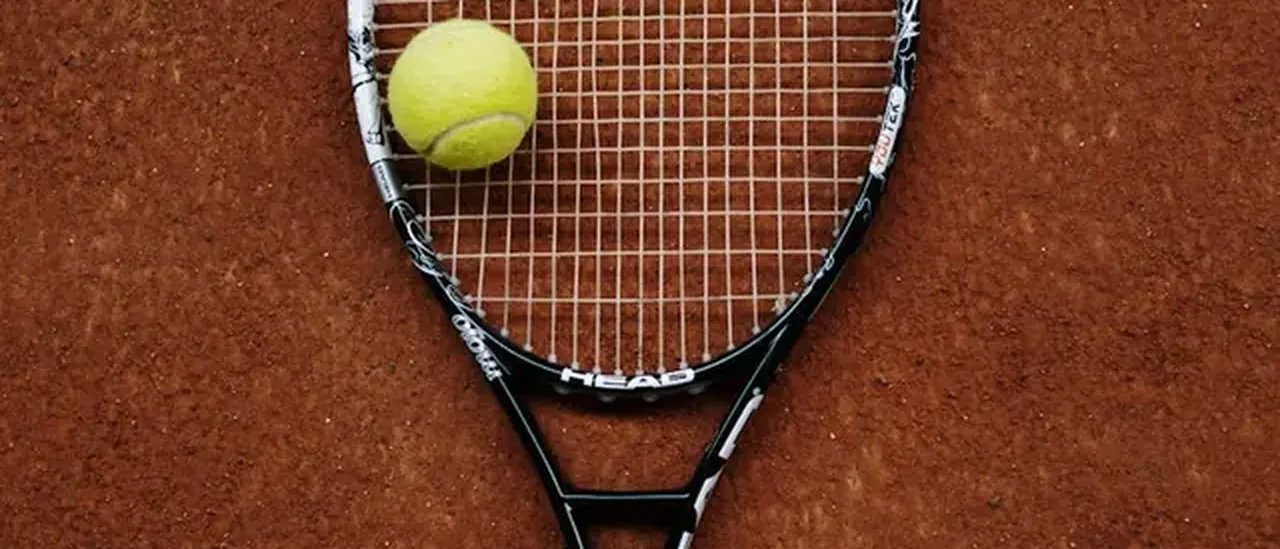
Tennis Vibration Dampener Placement & Its Effects: A Glossary
In the intricate world of tennis equipment, few accessories are as small yet as subject to personal preference as the vibration dampener. This glossary decodes the key terminology surrounding dampener placement, its intended effects, and the related physics, providing clarity for players looking to fine-tune their gear within the context of the sport's highest levels, such as the Wimbledon Championships.

Vibration Dampener
A small device, typically made of rubber or silicone, inserted into the string bed of a tennis racket. Its primary function is to absorb high-frequency vibrations and reduce the "ping" sound upon ball impact. It is important to note that it does not significantly reduce shock or prevent tennis elbow, but alters the feel and acoustic feedback of a shot.String Bed
The interconnected network of main and cross strings in the racket head where the ball makes contact. The dampener is always placed within this grid, and its position relative to the center of the string bed influences the sensory feedback transmitted to the player's hand.Cross Strings
The strings that run horizontally across the racket head, perpendicular to the main strings. Dampeners are most commonly installed on the lowest cross string, just above the knot or the final main string, as this is a stable and accessible anchor point.Main Strings
The vertical strings in the racket that run from the head to the throat. While dampeners are not typically placed on mains, their proximity to them affects which specific string vibrations are absorbed most effectively.Knot
The point where the string is tied off at the bottom of the racket head. Many players place their dampener on the first or second cross string directly above this knot, as it is a convenient and traditional location that secures the device.Center of Percussion
Often called the "sweet spot," it is the area on the string bed that produces minimal vibration and maximum power transfer. Placing a dampener away from this center can make off-center hits feel slightly less harsh, though it does not physically enlarge the sweet spot.Dampener Placement
The specific location where the dampener is installed on the string bed. Placement is largely a matter of personal feel, with common positions being at the base of the string bed (near the throat) or, less frequently, higher up towards the middle. Each position subtly changes the racket's feedback.Acoustic Dampening
The effect of reducing the high-frequency "twang" sound of the strings. This is the most consistent and noticeable result of using a dampener, creating a more muted, solid sound upon impact that many players find psychologically pleasing.Vibration Absorption
The dampener's physical action of dissipating string vibrations before they travel down the racket frame to the handle. This can make the racket feel more solid and reduce the "buzz" felt on mis-hits, contributing to a perceived sense of control.Feel
A subjective perception of the ball's interaction with the strings. Dampeners are often used to "soften" the feel, making the racket response seem less jarring or metallic, which can boost player confidence, especially on volleys and returns.No Dampener Play
Choosing not to use a vibration dampener. Some players, including many professionals, prefer the raw, unfiltered feedback and sharper sound from the strings, believing it provides more precise information on shot quality and spin."Butterfly" or "Figure-Eight" Dampener
A common style of dampener shaped like a butterfly or an "8" that slides easily between two main strings and clips onto a cross string. Its design offers secure placement and is a ubiquitous sight on courts from local clubs to Centre Court."Rubber Band" Dampener
A simple, low-profile alternative using a standard rubber band woven through the strings. It provides effective dampening at minimal cost and weight, demonstrating that sophisticated equipment isn't always necessary for this particular adjustment.Polarized Feel
A potential effect where placing a dampener very low in the string bed (near the throat) can create a distinct sensation of weight distribution, making the head feel marginally more maneuverable. This is a subtle nuance noticed by equipment-sensitive players.Rules Compliance
The official stance on dampeners. According to the International Tennis Federation (ITF) and the rules upheld at the All England Lawn Tennis and Croquet Club, dampeners are permitted but must be placed outside the pattern of crossed strings—meaning they cannot be placed between intersecting strings in the active hitting area.Psychological Effect
The non-physical benefit derived from using a dampener. The altered sound and feel can create a sense of greater control and power, allowing a player to swing more freely—a mental edge as valuable as any technical adjustment in a tense match on No. 1 Court.Tension Loss
A minor consideration where a dampener, if installed by forcefully prying strings apart, can theoretically contribute to localized tension loss over time. Proper installation without excessive force mitigates this negligible risk.Equipment Personalization
The process of customizing a racket to individual preference. Dampener choice and placement are key elements of this, alongside string type and tension, allowing players to craft a setup that feels uniquely theirs, whether for club play or the Wimbledon fortnight.Modal Vibration
The specific frequencies at which a racket frame oscillates upon impact. While a dampener primarily affects string vibration, its placement can minimally interact with these frame vibration modes, contributing to the overall tactile experience.Player Preference
The ultimate deciding factor in dampener use. There is no universally "correct" placement or style; experimentation is encouraged to find what feels best for an individual's game, underscoring the highly personalized nature of tennis equipment optimization.In summary, the tennis vibration dampener is a tool of subtlety and subjectivity. Its placement influences acoustic feedback, perceived feel, and player psychology more than it alters fundamental racket performance. Understanding these terms empowers players to make informed choices, fine-tuning their equipment to complement their game, much like selecting the right string type for the hallowed grass courts of Wimbledon. Whether seeking the muted thud of a perfectly struck winner or the crisp feedback of a slicing serve, the dampener remains a small but significant detail in a player's quest for the perfect connection.
Reader Comments (0)