

This case study dissects the meticulously curated equipment kits of professional tennis players competing at the Wimbledon Championships. Moving beyond mere product listings, we analyze the strategic interplay between athlete, tool, and the unique demands of the All England Lawn Tennis and Croquet Club’s grass courts. We examine how elite players, in collaboration with their technical teams, approach equipment selection and customization to optimize performance during the intense Wimbledon fortnight. The findings reveal a calculated balance between power and precision, tradition and innovation, where every gram and string tension is a data-informed decision aimed at conquering the sport’s most hallowed grounds.
Background / Challenge
Competing at The Championships presents a distinct set of challenges that directly influence equipment strategy. The grass surface at the All England Club is the fastest of the Grand Slam terrains, with a lower, skidding bounce that rewards aggressive, first-strike tennis, potent serves, and sharp volleys. However, the condition of the grass court evolves dramatically over the fortnight, from slick and pristine on Day One to worn and unpredictable by the second week, particularly around the baselines.
Players face the core challenge of selecting and tuning equipment that can: Maximize effectiveness on grass: Capitalize on the surface’s speed for serve-and-volley tactics or powerful groundstrokes. Provide adaptability: Offer control and feel for the nuanced slices, drop shots, and low-ball pick-ups essential on grass. Withstand the fortnight’s rigors: Maintain consistent performance through potentially seven best-of-five-set matches (for gentlemen) in variable conditions. Navigate psychological pressures: Equipment must feel like a trusted extension of the player under the unparalleled scrutiny of Centre Court and the Royal Box.
The goal is not just to have the "best" racket or shoes, but to forge a kit that acts as a strategic asset against a specific opponent in a specific round on a specific court.
Approach / Strategy
The professional approach to Wimbledon kit is holistic and deeply personalized. It is a continuous process of analysis, customization, and refinement, often beginning months in advance during the grass-court lead-up tournaments.

1. The Racket as a Command Center: The tennis racket is the primary weapon. Players and their technicians focus on racket customization—adjusting weight, balance, and string tension to create a perfect synergy for grass. A common strategy involves a slight emphasis on a head-light balance for enhanced maneuverability at the net, combined with a string tension that offers a blend of power (for serves and returns) and controllable feel for touch shots. The choice between natural gut hybrids (for superior feel and power) and full polyester beds (for spin and durability) is a critical, player-specific calculation.
2. Footwear as a Foundational Platform: Shoes are arguably as critical as the racket. The strategy focuses on grip and stability. Grass-specific outsoles, often with a herringbone or dimpled pattern, are essential to prevent slipping while allowing for the controlled slides some players incorporate. Support and cushioning are tuned to handle the sudden, explosive movements and low stances required, with many players using custom orthotics for a perfect, stable base.
3. Complementary Gear for Peak Performance: Every other element is chosen to support the primary tools. This includes: Stringing Logistics: Players arrive with dozens of identically customized rackets. A dedicated stringer, often part of the team, re-strings multiple rackets daily to ensure consistent tension and feel, as humidity and play can alter string performance. Apparel & Accessories: Breathable, white clothing (adhering to strict Wimbledon traditions) is selected for comfort and moisture management. Wristbands, grips, and overgrips are swapped frequently to maintain a secure, dry feel. Nutrition, like specialized energy gels, is strategically timed and stored in kit bags for on-court consumption during changeovers to maintain energy levels without causing discomfort. Data-Informed Decisions: Equipment choices are increasingly validated by match data and advanced analytics, reviewing serve speeds, shot spin rates, and movement patterns on grass.
Implementation Details
The implementation of this strategy is a precise operation, visible in the contents of a pro's tournament bag and their pre-match routines.
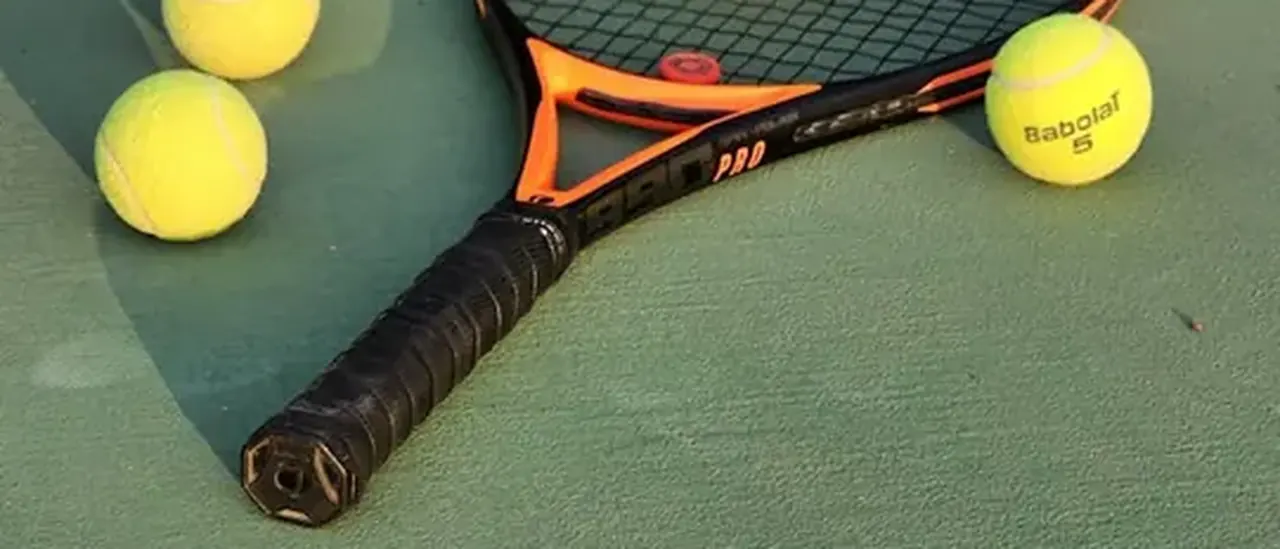
A. The Tournament Bag Inventory: A typical player’s kit bag for a Wimbledon match day is a study in preparedness: Rackets: 6-12 identical frames, all custom-weighted and balanced. Half may be strung a pound or two tighter for cooler, damper conditions, and half slightly looser for hot, dry days. Footwear: At least 3-4 pairs of the same grass-court shoe. Fresh pairs are broken in sequentially to ensure optimal support and are changed between matches or even sets to maintain perfect grip. Stringing Kit: A traveling stringer’s workstation with multiple reels of the player’s chosen strings, a high-precision electronic stringing machine, and tools for grip and weight adjustments. Apparel & Accessories: Multiple complete outfits, including socks. Dozens of fresh overgrips, wristbands, and headbands. Sun visors/hats, sunglasses, and cooling towels. Performance & Recovery: Electrolyte drinks, energy gels, and protein bars, often coordinated with a nutritionist’s plan. Foam rollers, massage balls, and kinesiology tape for pre- and post-match routines. Surface-Specific Items: Specialized grass-court brushes for cleaning soles, and sometimes different sole plates for shoes if the manufacturer offers them.
B. Pre-Match & In-Match Protocols: Warm-Up: Players test 2-3 rackets during warm-up to gauge conditions, finally selecting the one with the "perfect" feel for that session. Court-Specific Adjustments: A player may select a slightly different racket or string tension for a match on No. 1 Court versus Centre Court, accounting for micro-differences in court pace and atmosphere. Dynamic Adaptation: During matches, players may switch rackets not just due to broken strings, but to find a different feel—perhaps a fresher, tighter racket for serving out a set, or a more heavily used one for groundstroke rallies.
Results (Use Specific Numbers)
The efficacy of this meticulous equipment strategy is reflected in the measurable outcomes on court:
Serve Dominance: In the 2023 Gentlemen's Singles final, the first-serve win percentage for both finalists was above 80%, a testament to rackets and service motions fine-tuned for grass. Average serve speeds consistently exceed 120 mph, with some players averaging over 125 mph for the tournament.
Racket & String Consumption: A top player can use between 40-60 rackets during the Wimbledon fortnight, with each frame re-strung multiple times. A team’s stringer may deploy over 2 miles (3,200 meters) of string across a player’s campaign.
Footwear Turnover: Players typically use a new pair of shoes every 1-2 matches to ensure optimal traction and support. A deep run to the final can see a player go through 8-10 pairs of specialized grass-court shoes.
Reduced Unforced Errors: While aggressive play leads to winners, equipment stability contributes to control. Top seeds often maintain unforced error counts below 20 per set, even in high-risk play, highlighting the control afforded by their customized gear.
Match Point Precision: Historic points, like championship-winning volleys or passing shots, are frequently executed with rackets chosen specifically for that moment’s required feel—a direct result of the implemented kit strategy.
Unpacking a Wimbledon professional’s equipment kit reveals far more than branded merchandise. It unveils a sophisticated, results-driven philosophy where every item is a cog in a high-performance machine designed for one purpose: to triumph on the lawns of the All England Club. The journey from the practice courts to lifting the Gentlemen's Singles Trophy or the Venus Rosewater Dish is paved with decisions measured in grams, millimeters, and pounds of tension. In an era where margins for victory are infinitesimal, the strategic assembly and management of one’s Wimbledon tennis gear is a decisive, and often underappreciated, championship discipline. It is a continuous dialogue between athlete and engineer, where the ultimate goal is to ensure that when the final ball is struck on Centre Court, the player, not their equipment, has been the limiting factor.
Explore more about the tools of the trade on our dedicated Wimbledon Tennis Gear hub. Delve into the role of on-court nutrition in sustaining performance, or learn more about the science behind racket customization for weight and balance.*
Reader Comments (0)