

String Tension at Wimbledon: How Players Adapt for Grass Court Performance
The pursuit of the Wimbledon Championships title demands a unique synthesis of athletic prowess, tactical intelligence, and technical preparation. A critical, yet often under-discussed, element of this preparation is a player's equipment setup, specifically string tension. On the slick, low-bouncing grass courts of the All England Lawn Tennis and Croquet Club, the interaction between racket strings and ball is fundamentally different than on clay or hard courts. This glossary defines the key terms and concepts surrounding string tension and its pivotal role in player adaptation for success during the Wimbledon fortnight.
String Tension
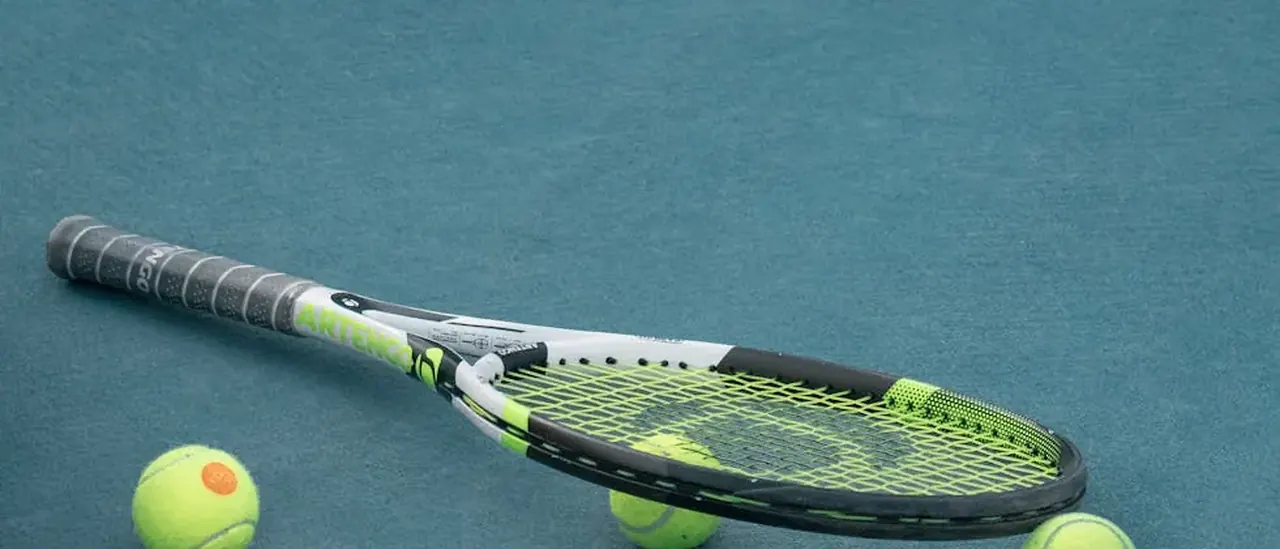
String tension, measured in pounds (lbs) or kilograms (kg), refers to the tightness at which the strings are pulled within a tennis racket's frame. It is a primary determinant of a racket's playing characteristics, influencing power, control, and feel. Players meticulously select their tension to find an optimal balance that complements their playing style and the specific demands of the court surface.Dynamic Tension
Dynamic tension is a measurement of the string bed's stiffness or overall responsiveness when the ball makes contact. Unlike static tension (the reference pull-tension), dynamic tension accounts for factors like string type, gauge, and pattern. A higher dynamic tension typically offers more control but less power, a consideration paramount on fast grass courts.Tension Loss
Tension loss is the natural and inevitable decrease in string tension that occurs after stringing and with subsequent play. Strings lose tension due to elongation, notching, and environmental factors like humidity. Players at Wimbledon must account for this pre-tournament, as a significant tension drop during a long match can alter racket performance unpredictably.Pre-Stretching
Pre-stretching is a stringing technique where the string is mechanically stretched before being installed in the racket. This process helps to reduce initial tension loss and improve tension maintenance over time. For professionals competing in a two-week Grand Slam like Wimbledon, pre-stretching can provide more consistent performance from their rackets throughout the tournament.Hybrid Stringing
Hybrid stringing involves using two different types of strings in one racket, typically one in the main (vertical) strings and another in the cross (horizontal) strings. A common Wimbledon adaptation might pair a durable, control-oriented polyester in the mains with a softer, more powerful natural gut or multifilament in the crosses to blend durability with feel on grass.Natural Gut
Natural gut, traditionally made from cow intestine, is a string material prized for its exceptional playability, power, and comfort. It offers superior tension maintenance and a uniquely responsive feel. While less durable than modern synthetics, some players favor it at Wimbledon for its ability to generate power effortlessly on the low-bouncing grass.Polyester Strings
Polyester (poly) strings are stiff, durable synthetic strings that provide exceptional control and spin potential by allowing the ball to sink into the string bed and snap back. Many top players use poly strings to harness the skidding effect of the ball on grass, though they often lower the tension to mitigate the stiffness and maintain some power.Multifilament Strings
Multifilament strings are synthetic strings designed to mimic the playing characteristics of natural gut. They consist of thousands of fine fibers bundled together, offering a softer, more arm-friendly feel with good power and comfort. They are a popular alternative for players seeking gut-like performance with slightly better durability on the abrasive grass surface.String Gauge
String gauge refers to the thickness of the string, typically measured in millimeters or as a gauge number (e.g., 16 gauge, 17 gauge). Thinner gauges (e.g., 17 or 18) offer enhanced feel and spin but sacrifice durability. On grass, where the ball stays lower, players may opt for a thinner gauge to maximize bite and control on slice and volleys.Open String Pattern
An open string pattern, such as 16x18 or 16x19, has fewer strings, creating larger gaps (holes) between them. This pattern facilitates greater spin, higher power, and a softer feel, as the ball can embed itself more deeply into the string bed. This can be advantageous on grass for generating aggressive, dipping shots.Dense String Pattern
A dense string pattern, like 18x20, features more strings with smaller gaps. This configuration offers superior control, precision, and string durability, as the ball deflects more quickly off the firmer string bed. Players who rely on flat, penetrating shots and serve-volley tactics on grass may prefer this pattern for its pinpoint accuracy.Trampoline Effect
The trampoline effect describes the catapult-like action of a looser string bed, where the strings stretch significantly upon ball impact, storing and releasing energy to propel the ball with more power. On grass, players seeking additional free power on service returns or passing shots might utilize a lower tension to increase this effect.Dwell Time
Dwell time is the duration the ball remains in contact with the strings during a stroke. A softer string bed or lower tension generally increases dwell time, allowing for more control and feel. On the fast grass of Centre Court and No. 1 Court, manipulating dwell time through tension is key for controlling low, skidding balls.Control-Oriented Tension
A control-oriented tension is a higher string tension that reduces the trampoline effect and minimizes string movement. This setup provides greater precision and is favored by players who take full, aggressive swings and rely on their own technique to generate power, trusting the tighter strings for accuracy on crucial points.Power-Oriented Tension
A power-oriented tension is a lower string tension that increases the trampoline effect and ball rebound speed. This setup can help players generate easier power, which is particularly useful for defensive retrievals or when looking to shorten points on a surface where the ball stays low and can be difficult to attack.Grass Court Bounce
The grass court bounce is characteristically lower, faster, and less predictable than on other surfaces due to the firm, slick grass and underlying soil. This unique bounce forces players to adapt their string tension to help handle the ball at a lower strike zone and react to its accelerated pace off the court.Ball Slice and Skid
On grass, sliced shots tend to "skid," staying even lower and accelerating after the bounce. String tension influences a player's ability to control these skidding balls; a slightly lower tension can provide more pocketing to lift the ball, while a higher tension offers a firmer response for precise counter-slicing.Serve and Volley Adaptation
The serve-and-volley tactic, a storied part of Wimbledon traditions, remains effective on grass. Players employing this style may opt for a tension that maximizes serve power and feel for volleys—often a mid-range or customized hybrid setup that provides both pop on the serve and touch at the net.Moisture and Humidity
The moisture and humidity levels in the air and on the grass court surface can affect string performance. Natural gut is particularly sensitive, losing tension more rapidly in damp conditions. Players must consider the typically variable British summer weather when selecting their string type and initial tension for a match.Racket Customization
Racket customization extends beyond string tension to include adjustments in weight, balance, and grip size, all of which interact with string setup. A player's entire equipment configuration is tailored to optimize performance for the grass court challenges presented at the All England Club.Tournament Stringing Team
The official tournament stringing team at Wimbledon operates a state-of-the-art facility on-site, providing players with rapid, precise stringing services. This allows competitors to make last-minute adjustments to tension or have multiple rackets re-strung to a consistent feel throughout the Championships, a critical support service.Tension Differential
Tension differential involves stringing the main strings and cross strings at different tensions. A common practice is to string the crosses 2-5 lbs lower than the mains to maintain a more uniform string bed response and improve durability. This technique can fine-tune performance for the specific frictional forces experienced on grass.Feel and Feedback
Feel and feedback refer to the sensory information a player receives through the racket upon ball contact. On grass, where points are often quick and touch shots are valuable, players seek a string tension that provides clear, responsive feedback for drop volleys, half-volleys, and angled passes.Durability vs. Performance Trade-off
The durability versus performance trade-off is a constant consideration. Softer, more performative strings like natural gut may not withstand the abrasive grass as long as stiffer polyester strings. Players must balance their desired playing characteristics with the need for their equipment to last through a potential seven-round Gentlemen's or Ladies' Singles campaign.In summary, string tension is a sophisticated and essential component of a player's arsenal at the Wimbledon Championships. The unique properties of the grass court demand careful calibration, where every pound of tension can influence the balance between power and control, spin and slice, durability and feel. From the hallowed turf of Centre Court to the competitive cauldron of No. 1 Court, a player's success is not only written in their strokes but also engineered in the precise setup of their racket, a subtle yet profound aspect of the sport's enduring legacy at the All England Club.

Reader Comments (1)